
How to Help a Child Who Is Scared of Thunder
Thunder has a way of showing up at exactly the wrong moment: bath time, bedtime, the middle of dinner. In Los Angeles it's rare enough to catch a whole household off guard, which may be part of why it rattles some kids so much. For a child who is scared of thunder, though, how often it happens matters a lot less than how big it sounds when it does.
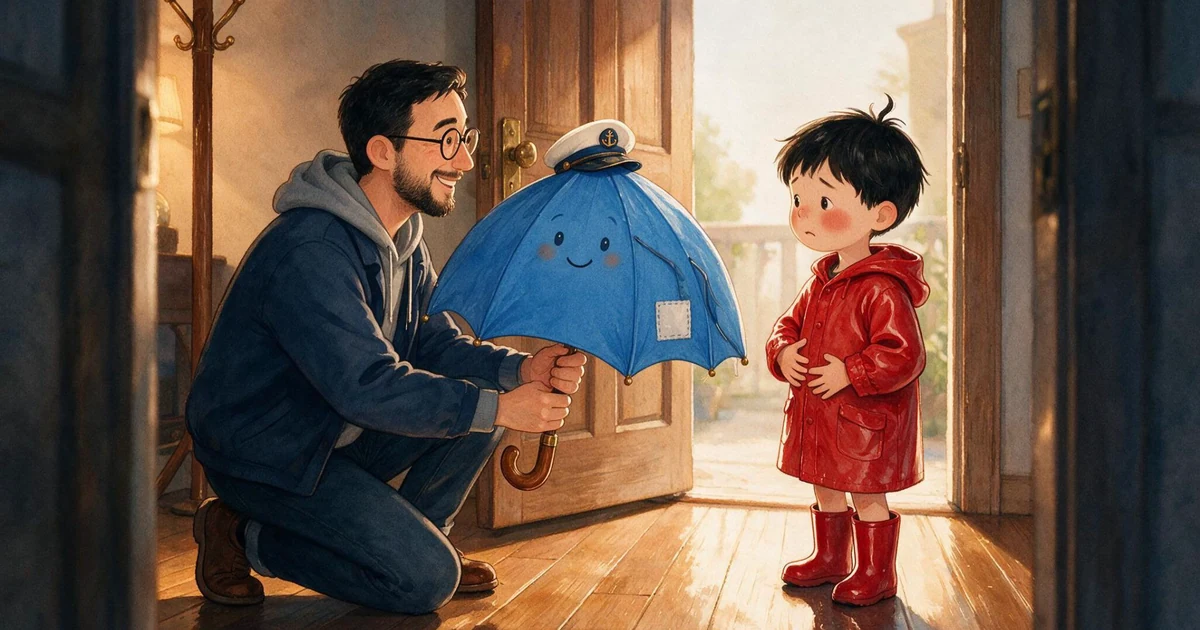
Here are some gentle, practical ways to help a child who is scared of thunder, drawn from the same ideas behind The Umbrella Named Captain Blue (working title), the story video on my YouTube channel. None of them will make the fear disappear, and that isn't really the goal. The goal is helping your child feel safe enough to take one small step while the feeling is still there.
First, take the fear seriously
"There's nothing to be scared of" is the most natural thing in the world to say, and it rarely helps. To a four-year-old, a sound that shakes the windows is something. Try naming what's happening instead: "That was a loud one. Your body jumped. That makes sense."
In the story, when Benny whispers, "It might come back," Dad doesn't argue. He nods. Then he offers something to do. That order, feeling first and then a next step, works at home too.
Explain the sound in kid-sized words
Fear of thunder in kids often grows when the sound feels mysterious. A short, true explanation helps: thunder is the sound a storm makes, and it gets quieter as the storm moves away. You don't need a science lesson. One or two sentences, then let them ask more if they want to.
The safety part matters, too. Inside, with a grown-up, is exactly the right place to be while a storm passes, and many weather services suggest waiting about half an hour after the last rumble before heading back outside. Benny and Dad wait as well; they only go out once the thunder has moved on.
Ways to calm a child during a storm
Make a storm spot
Under the kitchen table is honestly a solid plan. A storm spot gives a scared kid a place that feels like theirs: a blanket fort, a corner with pillows, a closet with a flashlight. Stock it with a few comforts, like a stuffed animal, a favorite book, or a fan for steady background noise.
The point isn't to hide forever. It's to have somewhere to catch your breath before coming back out.
Turn the rumbles into a game
Listening together can shift a child from bracing for the next boom to paying attention to it. A few ideas for calming kids during a storm:
- Rate the rumbles. Was that one a mumble, a grumble, or a BOOM? Give it a score from one to five.
- Count between rumbles. Slow counting gives a worried mind something to hold. As the storm drifts off, the counts get longer, and kids can actually hear it leaving.
- Invent sound words. Benny's story is full of them: boom, rumble, mumble, pitter-pat. Let your child make up a new word for each sound they hear.
Give them a job
Fear shrinks a little when hands are busy. A small, manageable job, like being in charge of the flashlight, checking on the dog, or counting raindrops racing down the window, helps a child feel useful instead of helpless. In the story, Benny's first job is simply holding the umbrella. It turns out to be enough.
Lend them a brave helper
Some kids do well with a helper object, the way Benny has Captain Blue. It can be a stuffed animal, a raincoat, a special blanket, or a flashlight with a name. You're not telling them the object has powers. You're giving them something steady to hold while they do the hard thing. If you'd like an activity for this, Monday's companion guide to the thunder story has a simple "name your own captain" drawing project.
Practice on calm days
The middle of a storm is a hard time to learn anything. Calm days are better for practice. Read a story about a storm together. Play a recording of thunder at a low volume and let your child control it. Act out a storm with pots and wooden spoons. When kids are in charge of the sound, it often stops feeling quite so big.
Afterward, notice what they did
When the storm has passed, skip the big speech. Just say what you saw: "Your tummy was drumming, and you still came to the window with me." Kids remember being noticed. Often that's the thing that makes them a little braver the next time.
When a fear of thunder needs more help
Lots of kids are scared of thunder, and for most of them it eases with time and patience. If your child's fear is intense, lingers long after storms, or starts getting in the way of sleep, school, or play, it's worth mentioning to your pediatrician.
Watch the story together
If you'd like a gentle place to start, The Umbrella Named Captain Blue is a narrated, illustrated story video about three minutes long, with the thunder kept soft and low (the narration and illustrations are AI-generated):
https://www.youtube.com/watch?v=a_zlAMSLT0s
You'll find it, along with more read-aloud stories as they arrive, in the read-aloud playlist on YouTube.
— Ronald
Ronald Moy writes little stories about big feelings and everyday wonder for kids 4–8. His picture books are in development.