
A Garden Story for Kids About Noticing Small Things
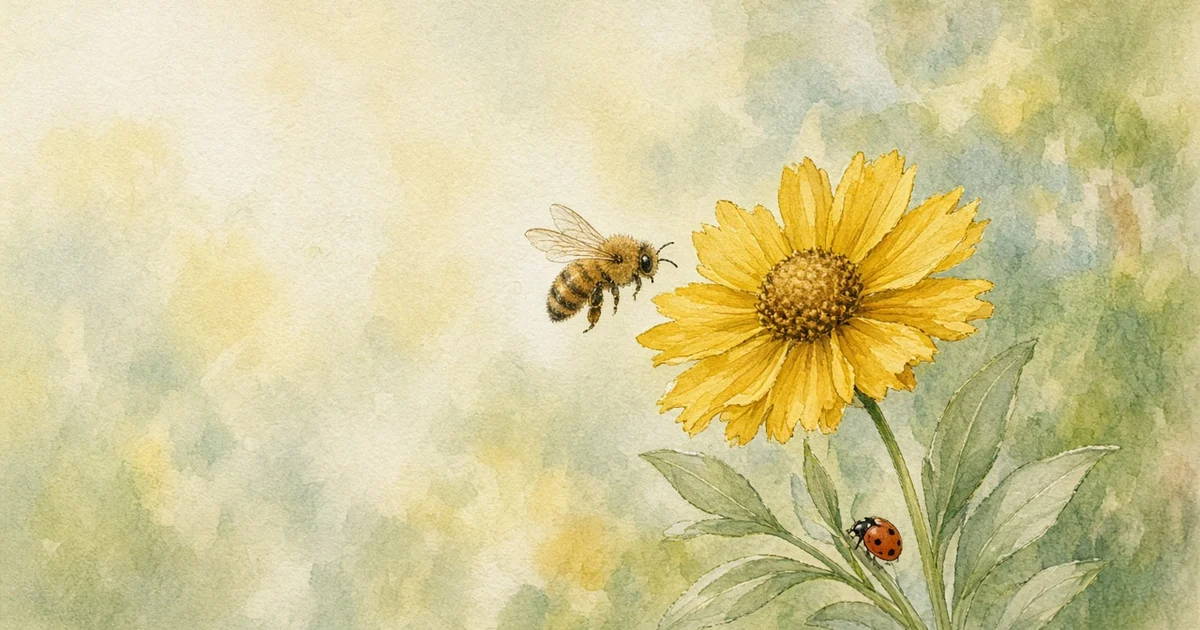
Milo bursts through his grandma's garden gate with one urgent question: what's the biggest thing in here?
It's a very kid question. Big is exciting. Big is easy to point at. And a garden is full of big contenders: a sunflower taller than the fence, a pumpkin too heavy to budge, an orange that takes both hands to hold.
The Smallest Thing in the Garden (working title) is a garden story for kids that's still in the works. It follows Milo, his calm and observant Grandma June, and a hunt that doesn't go quite the way Milo expects. This post is for grown-ups who'd like to borrow the idea before the story is finished: a few thoughts on noticing small things, a backyard noticing walk, and three questions to talk about along the way.
What the garden story is about
Milo wants the biggest thing in Grandma June's sunny backyard. Grandma, who never rushes an answer, nudges him toward a slightly different question: what does the biggest job?
A big job obviously needs a big animal, so Milo goes looking. A squirrel turns out to be busy, but mostly with snacks. A mockingbird is loud, but not exactly working. A lizard doing push-ups on a stone is mostly showing off. Then something tiny zips past Milo's nose.
I'll stop there. The rest belongs to the story.
Why "biggest" is such a kid question
Small kids live in a world built for taller people. Counters are high, doorknobs are a reach, and almost everyone they know is bigger than they are. It makes sense that "biggest" and "strongest" come up so often. They're ways of sorting a world that can feel oversized.
The fun part, for a grown-up, is the wrong guesses. Kids will nominate the dog, the tallest tree, the garbage truck, Dad. Every one of those answers is worth hearing. The story isn't about correcting Milo. It's about him looking long enough to change his own mind.
Try a backyard noticing walk
You don't need a garden for this. A patch of grass, a planter on a balcony, the strip of weeds along a sidewalk, or a park bench all work.
You'll need: ten minutes, plus (if you have one) a magnifying glass. A phone camera zoomed in works too.
- Look low. Crouch down to kid height, or lower. Lie on your tummy if the ground is dry.
- Look slow. Pick one small spot, about the size of a dinner plate, and watch it for one whole minute without moving on.
- Count tiny visitors. Ants, beetles, flies, a ladybug, a moth. Tally them on your fingers.
- Give one a job. Is that ant carrying something? Where do you think it's going?
- Watch bees from a distance. Bees are wonderful to watch and better left alone: no touching, no feeding, no trying to catch them. If one comes close, stay still and let it go about its business.
Afterward, ask which visitor surprised them most. You may hear a lot about one particular ant.
Questions to talk about on the walk
These are open on purpose. There's no answer to steer toward.
- What's the biggest thing you can see from right here? What's the smallest?
- Which tiny creature looked the busiest? What do you think it was doing?
- What is one small thing that makes a big difference in your day?
The third one tends to get the best answers at bedtime, when the day is already behind them.
New on the channel: a sidewalk that talks
The newest read-aloud on YouTube is The Day the Sidewalk Started Talking (working title), about a girl named Leila who notices a chalk question outside her apartment building and decides to answer it. It's a narrated, illustrated story video for kids 5–8, about three minutes long. The video's narration and illustrations are AI-generated.
https://www.youtube.com/watch?v=7KBL7Kui6UA
If you're curious how a story changes on its way from first idea to finished video, my notes on writing a picture book about courage go behind the scenes of the rainy-day story that came first.
A note about the garden story
The Smallest Thing in the Garden is a working title, and the picture book is still in development; it isn't published. There's no video of it yet. More read-aloud stories arrive in the Ronald Moy Presents playlist as they're finished.
— Ronald
Ronald Moy writes little stories about big feelings and everyday wonder for kids 4–8. His picture books are in development.