
When Kids Ask Why All Day: Keeping Curiosity Alive
Why is toast darker on one side? Why do pigeons bob their heads? Why can you see the moon in the daytime?
If you spend your days with a four-to-eight-year-old, you've probably heard a hundred questions like these before lunch. It's one of the best things about kids this age. It's also, honestly, exhausting. Nobody can answer every "why?" the moment it arrives, especially while making dinner, finding a missing shoe, or merging onto the freeway.
The good news is that you don't have to. Here are some practical ways to encourage curiosity in kids, including on the days when "later" is the only honest answer you've got.
Why "why?" happens so much
Kids ask questions because the world is new to them and they're building a map of how it works. Each "why?" is a little test: does this fit with what I already know? Some questions are about facts. Others are really about connection. A child asking "why?" for the fifth time in a row sometimes just wants you to keep talking with them.
Knowing that takes some of the pressure off. You're not a search engine. You're the person they trust to wonder with.
Saying "later" without shutting curiosity down
"Later" is fine. What matters is whether later ever comes. A few ways to make it real:
- Name the question back. "That's a good one: why do pigeons bob their heads? I can't look it up right now, but I want to."
- Write it down. A sticky note on the fridge or a note on your phone shows the question was worth keeping.
- Pick a time. "Let's look it up after bath" works better than an open-ended "later," because kids can hold you to it.
When later does come, let your child do as much of the finding out as they can: flipping pages, looking at pictures, guessing first.
Start a question jar
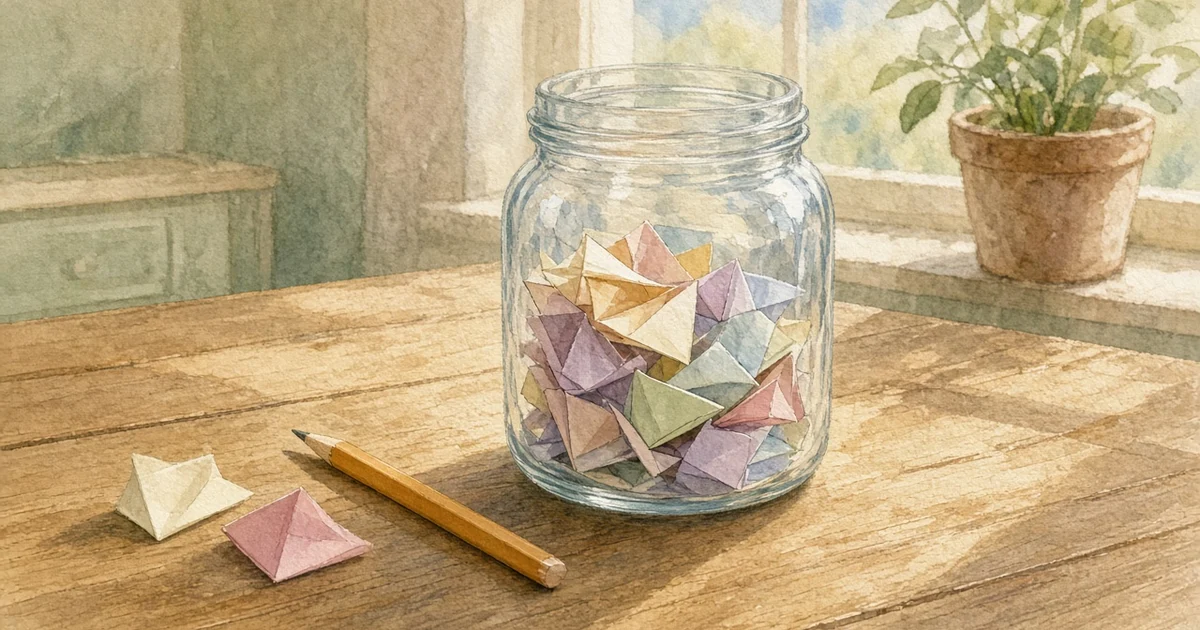
A question jar turns "not now" into "not yet."
You'll need: a clear jar, scraps of paper, and a pencil.
- Whenever a question can't be answered right away, write it on a slip (or let your child draw it) and fold it into the jar.
- Once a week, pick one slip together.
- Investigate it however you like: a library book, a walk outside, a simple experiment at the kitchen table, a call to a grandparent who might know.
- Keep the answered slips in a separate pile, so kids can see how many mysteries they've solved.
The full jar is part of the fun. It's proof of how much there is to wonder about.
"I don't know, let's find out" is a full answer
Kids don't need grown-ups who know everything. They need grown-ups who are curious too. Saying "I don't know" out loud, and then looking it up together, shows that not knowing is the start of something rather than a problem to hide.
It also takes the sting out of questions that don't have neat answers, like "where does the sky stop?" Some questions are for wondering about rather than solving, and that's allowed.
For classrooms: a Question Wall
Teachers can try a classroom version. Give each student a sticky note for a question they're curious about, and put them all on a wall or a door. Each week, the class chooses one to investigate together. One question usually leads to two more, which is exactly the point. Questions that don't get picked stay up, waiting their turn, and kids love checking whether theirs is next.
A story in the works about saving questions
This one connects to The Boy Who Saved His Questions (working title), a picture book still in development and not published. It's about Eli, a boy who asks so many questions that busy grown-ups keep saying "later," so he starts saving every unanswered one in a glass jar. I'm keeping the ending under wraps for now.
If your family likes noticing small things, Monday's post has a backyard noticing walk with a garden story in the works. And for a story to share at bedtime, the read-aloud stories are collected in the Ronald Moy Presents playlist on YouTube.
— Ronald
Ronald Moy writes little stories about big feelings and everyday wonder for kids 4–8. His picture books are in development.